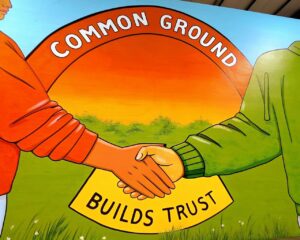
Common Ground: Where Great Transactions Begin

We’ve learned about transactions and how trust makes them happen. Now, let’s discover the magic starting point for both: common ground!

It’s like finding the perfect spot to build your treehouse where everyone wants to hang out.

What is Common Ground?

Common ground is when you and your customer both want the same thing. It’s like when you and your friend both want to play the same game at recess – that’s common ground!  In business, it means finding a way for both you and your customer to be happy with a transaction.

Examples:

  • You want to sell lemonade, and your neighbor is thirsty on a hot day.
  • You offer dog-walking services, and a busy family needs help with their puppy.

Why is Common Ground Important?

Common ground is super important because:

  1. It Starts Transactions: Without common ground, transactions can’t even begin!
  2. It Builds Trust: When you find common ground, it’s easier to trust each other.
  3. It Makes Everyone Happy: With common ground, both you and your customer win!

The Common Ground-Trust-Transaction Connection

Let’s see how common ground fits into our transaction dance:

  1. Find Common Ground: You have cool stickers, and your classmate loves decorating their notebook.
  2. Build Trust: You show your classmate your sticker collection and let them pick their favorite.
  3. Make the Transaction: Your classmate buys a sticker, and you both leave happy!

How to Find Common Ground

Finding common ground is like being a detective. Here’s how you do it:

  1. Ask Questions: Find out what your customer needs or wants.
  2. Listen Carefully: Pay attention to what they say – they might give you clues!
  3. Think Win-Win: Look for ways where both of you can be happy.
  4. Be Flexible: Sometimes you might need to change your offer a little bit.
  5. Show You Understand: Let your customer know you get what they want.

Common Ground Tools for Young Entrepreneurs

Here are some cool tools to help you find common ground:

  1. The “Why” Game: Ask “why” five times to really understand what your customer wants. Example:
    • “Why do you want a sticker?” “To decorate my notebook.”
    • “Why decorate your notebook?” “To make it look cool.”
    • “Why make it look cool?” “So I’ll be excited to do my homework.”
    • Keep going until you really understand!
  2. The “What Else” Question: Ask what else they might want instead of your product. Example: “If you didn’t buy my stickers, what else might you use to decorate your notebook?”
  3. The Compromise Creator: Think of ways to change your offer to match what they want. Example: If they want sparkly stickers but you only have plain ones, maybe you can add glitter!

Fun Activity: Common Ground Treasure Hunt!

Let’s play a game to practice finding common ground. You’ll need a partner for this.

  1. Each person writes down 5 things they want (like “eat ice cream” or “play video games”).
  2. Take turns trying to find something on both lists – that’s your common ground!
  3. For each common thing you find, come up with a pretend business idea that would make you both happy.
  4. The pair that finds the most common ground wins!

Think About It!

  • Can you think of a time when you and a friend wanted different things but found a way to both be happy?
  • If you were selling homemade bookmarks, how would you find out what kind of bookmarks your customers really want?
  • Why do you think it’s important to understand what your customer wants, even if it’s different from what you first thought to sell?

Remember, finding common ground is like discovering a treasure map where X marks the spot for both you and your customer. When you find it, trust grows, and awesome transactions happen! So always be on the lookout for that special common ground, and watch your business adventures take off!