Support Intellectual Development: Building Cognitive Skills Through Exploration
Intellectual development forms a crucial component of a child’s sense of personal power.
When children strengthen their cognitive abilities through engaging activities, they develop confidence in their capacity to understand the world, solve problems, and generate creative ideas.
These activities are designed to stimulate different aspects of intellectual growth for children aged 6 and up.
Through regular, enjoyable cognitive challenges, children develop the mental tools and confidence that contribute to a strong sense of capability and agency.
Activities
Table of Contents
1. Interactive Reading Sessions
Purpose: To develop critical thinking, comprehension, and analytical skills through engaged literary exploration.
Materials Needed:
Age-appropriate books of various genres
Reading journal or notebook
Discussion prompt cards
Character exploration sheets
Story mapping materials
Comfortable reading space
Steps:
1.
Creating an Engaging Reading Environment:
Begin by establishing a special space and routine for reading together.
This helps signal that reading time is important and valued:
Create a comfortable, well-lit reading nook
Remove distractions like electronic devices
Set a regular reading time (15-30 minutes daily)
Allow your child to help select books
Organize books so they’re easily accessible
Consider a special reading basket with current selections
2.
Developing Pre-Reading Engagement:
Before opening the book, build anticipation and activate prior knowledge:
Examine the cover together and discuss what it might tell about the story
Read the title and author, discussing any previous books you’ve read by this author
Ask prediction questions: “What do you think this book might be about?”
Connect to existing knowledge: “Does this remind you of anything we’ve read before?”
Set a purpose for reading: “Let’s find out how this character solves their problem.”
3.
Implementing Interactive Reading Strategies:
As you read together, use techniques that encourage active engagement:
Take turns reading (you read a page, then your child reads a page)
Pause at key points to ask open-ended questions
Model “think-alouds” where you share your own thoughts about the text
Encourage your child to visualize scenes
Use different voices for different characters
Ask your child to summarize periodically
Asking Thought-Provoking Questions:
Move beyond basic comprehension with questions that promote deeper thinking:
4.
For character understanding:
“Why do you think the character made that choice?”
“How do you think they’re feeling right now? What clues tell you that?”
“If you were in their situation, what would you do differently?”
“How has this character changed since the beginning of the story?”
5.
For plot analysis:
“What problem is the character trying to solve?”
“What might happen next? What clues make you think that?”
“Was there a turning point in the story? What was it?”
“How might the story change if this event hadn’t happened?”
6.
For thematic exploration:
“What do you think the author wants us to learn from this story?”
“What big ideas or messages do you see in this book?”
“How does this story connect to our own lives?”
“Why do you think the author wrote this book?”
7.
Extending the Reading Experience:
After finishing a book, deepen understanding through extension activities:
Create a story map showing key events
Draw or write about favorite characters
Act out a favorite scene
Write an alternative ending
Make connections between different books
Research related topics of interest
Reading Progression by Age:
Ages 6-7: Picture books with increasing text, early chapter books
Ages 8-9: Chapter books, series books, varied genres
Ages 10+: Novels, non-fiction, more complex themes and vocabulary
2. Brain-Teaser Games
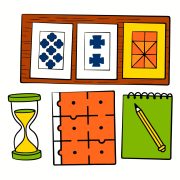
Purpose: To develop logical reasoning, pattern recognition, and problem-solving strategies.
Materials Needed:
Age-appropriate brain teasers and riddles
Logic puzzle books
Strategy games
Timer (optional)
Solution journal
Strategy Cards
Steps:
1.
Selecting Appropriate Brain Challenges:
Choose puzzles and teasers that match your child’s developmental level while providing just enough challenge to be engaging without being frustrating:
For younger children (6-7): Simple riddles, pattern recognition puzzles, spot-the-difference
For middle ages (8-9): Word puzzles, simple logic problems, lateral thinking challenges
For older children (10+): More complex riddles, multi-step logic puzzles, strategic thinking games
2.
Good resources include:
Puzzle books designed for their age group
Educational websites with interactive puzzles
Card games that involve logical thinking
Classic games like Mastermind, Sudoku (child versions), or Rush Hour
3.
Creating a Positive Problem-Solving Environment:
Set the stage for enjoyable cognitive challenges:
Introduce brain teasers as fun games rather than tests
Start with easier puzzles to build confidence
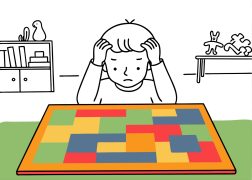
Establish that being stumped is normal and part of the process
Model positive self-talk when facing challenges
Create a comfortable space free from distractions
Consider a special “thinking cap” or other playful ritual to signal brain-teaser time
4.
Guiding the Problem-Solving Process:
Help your child develop effective cognitive strategies:
Encourage them to read or listen to the whole problem first
Ask them to explain the challenge in their own words
Suggest breaking complex problems into smaller parts
Provide paper for drawing or writing out the problem
Model thinking aloud: “I’m wondering if we could try…”
Ask guiding questions rather than giving answers: “What information do we know for sure?”
5.
Supporting Productive Struggle:
Help your child navigate challenges without solving the puzzle for them:
Acknowledge when something is difficult: “This is a tricky one!”
Encourage persistence: “Let’s try a different approach.”
Provide hints that guide rather than solve
Recognize effort: “I like how you’re really thinking about this.”
Suggest taking a break if frustration builds
Celebrate the “aha!” moment when it comes
6.
Reflecting on the Process:
After solving (or attempting) a brain teaser, discuss the experience:
“What strategy helped you solve this puzzle?”
“What did you try that didn’t work? How did that help you?”
“What would you do differently next time?”
“How did it feel when you figured it out?”
“What other situations might use similar thinking?”
7.
Document successful strategies in a “Brain Power” journal for future reference.
Puzzle Progression Path:
Start with visual puzzles requiring observation
Move to patterns and sequences
Progress to word problems and riddles
Advance to logic puzzles with multiple variables
Introduce strategic games requiring planning ahead
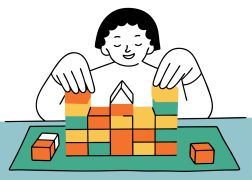
3. Creative Building Challenges
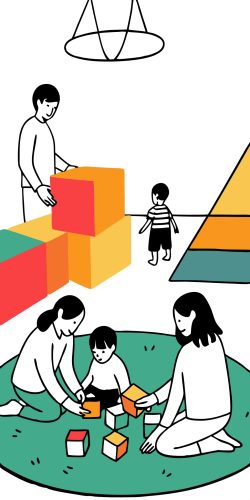
Purpose: To develop spatial reasoning, planning skills, creative problem-solving, and structural understanding.
Materials Needed:
Building blocks (wooden blocks, LEGO, etc.)
Recycled materials (cardboard, paper tubes, etc.)
Design challenge cards
Planning paper and pencils
Measuring tools
Camera for documentation
Steps:
1.
Setting Up Engaging Building Challenges:
Create structure while allowing for creativity:
Develop challenge cards with different building prompts
Organize materials in accessible containers
Provide a dedicated building space
Prepare visual examples for inspiration
Create a system for documenting completed challenges
Plan for display or storage of finished creations
2.
Sample challenge ideas:
“Build a bridge that can hold a small book”
“Create a home for a small toy animal”
“Design a tower as tall as your knee”
“Construct a vehicle that can roll down a ramp”
“Build something that can catch a marble”
3.
Guiding the Planning Process:
Encourage thoughtful preparation before building:
Discuss the challenge requirements
Brainstorm possible approaches together
Draw a simple sketch or plan
Select appropriate materials
Talk through potential problems that might arise
Consider constraints like physics and material properties
4.
Ask planning questions like:
“What do you think might be the hardest part of this challenge?”
“What materials would work best for this? Why?”
“How will you make sure your structure is stable?”
“What might you do if your first idea doesn’t work?”
5.
Supporting During Construction:
Provide the right balance of guidance and independence:
Allow time for experimentation
Offer suggestions only when asked or if frustration builds
Ask questions that prompt problem-solving
Point out interesting approaches or solutions
Encourage testing throughout the process
Model positive responses to structural failures
6.
Facilitating Engineering Thinking:
Help your child develop structural understanding:
Introduce basic engineering concepts naturally during building
Talk about balance, weight distribution, and stability
Discuss properties of different materials
Explore the strength of different shapes
Investigate how connections affect strength
Encourage revisions and improvements
7.
Reflecting and Showcasing:
After completion, deepen learning through reflection:
Photograph the creation from multiple angles
Discuss the building process and challenges faced
Test the structure against the original challenge parameters
Identify successful strategies
Consider improvements or variations
Display creations or create a photo album of building projects
Help your child formulate questions about the world
Notice their natural curiosities and wonder
Ask “What do you think would happen if…?”
Connect experiments to everyday observations
3.
Form a hypothesis:
Encourage prediction before experimentation
Use “I think… because…” statements
Write or draw predictions in the journal
Discuss the reasoning behind predictions
4.
Test with an experiment:
Follow procedures carefully
Take turns measuring and mixing
Observe closely during the experiment
Record observations as they happen
Take photos of different stages
5.
Analyze results:
Compare results to predictions
Discuss any surprising outcomes
Look for patterns or explanations
Consider variables that might have affected results
6.
Draw conclusions:
Help your child summarize what they learned
Connect to the original question
Consider new questions that arose
Think about real-world applications
7.
Selecting Age-Appropriate Experiments:
Choose experiments that match your child’s interests and abilities:
For younger children (6-7): Simple cause and effect experiments with immediate results
For middle ages (8-9): Multi-step experiments with clear variables
For older children (10+): More complex experiments that may take place over days
8.
Good starter experiments include:
Sink or float predictions
Simple chemical reactions (baking soda and vinegar)
Plant growth experiments
Weather observations
Simple machines
Food science experiments
9.
Asking Thought-Provoking Questions:
Deepen scientific thinking with effective questions:
“What do you notice happening?”
“Why do you think that happened?”
“What might change if we used a different material?”
“How could we test that idea?”
“How is this similar to something else we’ve seen?”
“What new questions do you have now?”
10.
Connecting to Broader Scientific Concepts:
Help your child see how experiments relate to larger ideas:
Research related scientific principles together
Look for the same concepts in different contexts
Discuss how scientists use similar methods
Connect to real-world applications and technologies
Consider ethical implications when appropriate
Experiment Progression Path:
Begin with single-variable, quick-result experiments
Progress to multi-step experiments
Advance to experiments that track changes over time
Move to open-ended investigations
Develop child-initiated research projects
These intellectual development activities help children build:
Critical thinking abilities
Problem-solving strategies
Spatial reasoning skills
Scientific thinking processes
Creative cognitive approaches
Remember that intellectual growth flourishes in an environment where questions are encouraged, mistakes are viewed as learning opportunities, and thinking is valued as much as knowing.
Next Steps
Choose activities that align with your child’s interests
Start with shorter sessions and build duration gradually
Document progress and insights
Connect intellectual challenges across different domains
Celebrate thinking processes rather than just correct answers
The goal is to help children develop confidence in their intellectual abilities while fostering a love of learning and discovery that will serve them throughout life.