Helping children overcome fear, worry, and paranoia is an essential aspect of their emotional development that goes far beyond simply reassuring them or dismissing their concerns.
It’s about helping children develop the skills to understand their emotions, recognize irrational thoughts, build healthy coping mechanisms, and create a foundation of emotional security—establishing the groundwork for psychological resilience, social confidence, and emotional well-being.
For children as young as 8, developing the capacity to manage fears and worries creates a foundation for emotional regulation, rational thinking, and the ability to face life’s challenges with confidence and composure.
This guide offers research-based strategies and practical activities that help cultivate these essential skills through engaging, age-appropriate approaches.
Helping children develop skills to manage fear, worry and paranoia:
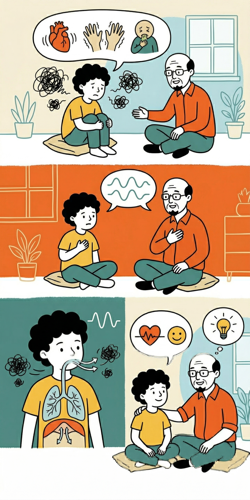
Understanding the science behind fear can empower children to manage their emotional responses more effectively. The Brain Games episode “Don’t Be Afraid” offers an engaging exploration of how our brains process fear and influence our perceptions and decisions. Through interactive demonstrations and captivating experiments, children discover the biological basis of the fight-or-flight response, how the amygdala processes threat signals, and why some fears are instinctual while others are learned.
These scientific insights help demystify the physical sensations of fear—racing heart, sweaty palms, quickened breathing—making these experiences less overwhelming when they occur.
By participating in the episode’s interactive challenges, children gain valuable self-awareness about their own fear responses and begin to see these reactions as normal biological processes they can understand and gradually learn to regulate, rather than mysterious forces they can’t control.
Episode: Don’t Be Afraid
Explores the biology behind fear — from the amygdala’s alarm system to the different feelings of sudden fright, lingering dread, and uncertain anxiety — and shows that fight, flight, and freeze are all normal, healthy responses your brain uses to keep you safe.
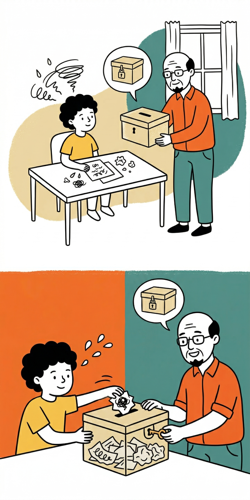
This strategy helps address the various factors that contribute to fear and paranoia, such as anxiety, depression, worry, negative self-beliefs, insomnia, and experiences of bullying (Bird et al., 2017).
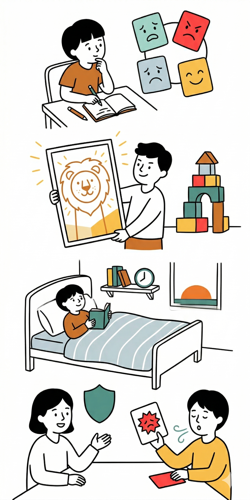
Through targeted activities that address these underlying factors, children learn to:
Episode: Sleepytime
Season 2, Episode 26
Bingo drifts through a dreamlike journey across the solar system, floating between warmth and loneliness as she moves through the night. When she drifts too far from her family, she feels cold and lost — but each time she finds her way back to Chilli’s warmth, she feels safe again. The episode mirrors the emotional landscape of sleep itself, where feelings steer the experience even when we’re not fully aware of them.
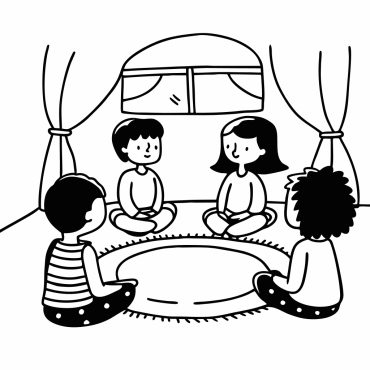
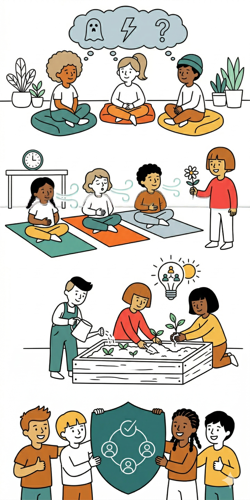
This strategy utilizes the power of group dynamics to help children manage worry through shared techniques like worry postponement, mindfulness, relaxation, and collaborative problem-solving (Mackintosh et al., 2021).
These activities help children:
By examining how children think about their own thoughts (metacognition), this strategy helps modify unhelpful beliefs about worry that can maintain anxiety and paranoia (Freeman et al., 2019).
This strategy helps children:
Episode: Pirates
Season 1, Episode 27
Bluey’s friend Missy is too scared to join in the pirate game, and Bandit is feeling self-conscious about playing with the kids. Both of them are held back by their own thoughts — Missy by fear, Bandit by worry about what others think. Through the episode, both discover that the thoughts keeping them on the sideline aren’t facts — they’re just thoughts, and choosing to act anyway is what bravery actually looks like.
This strategy addresses the connection between general anxiety and paranoid thinking, helping children understand how these experiences interact and how managing one can improve the other (Kuipers et al., 2018).
This strategy helps children:
7-Character Words: IMPROVE
Turned to profit and then to everything that gets better.
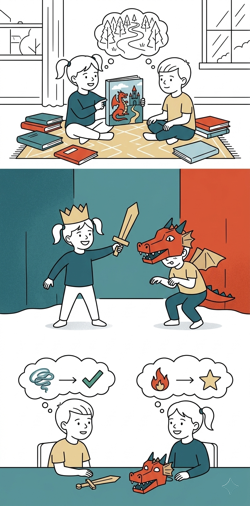
This strategy adapts proven CBT techniques for children, focusing on identifying, challenging, and changing unhelpful thought patterns and behaviors that maintain fear and worry (Freeman, 2016).
These activities help children:
This strategy focuses on understanding and managing feelings of shame, which research shows can trigger paranoid thoughts, especially in children with elevated sensitivity (Hennig, 2019).
This strategy helps children:
This strategy recognizes that each child’s experience of fear and paranoia is unique, requiring personalized approaches that address their specific challenges and build on their individual strengths (Bird et al., 2022).
This strategy helps children:
Each strategy section includes detailed activities, implementation guides, and tips for success.
Choose activities based on:
Remember that helping children overcome fear, worry, and paranoia is a gradual process that requires:
Select any of the seven strategy sections above to find detailed activities and implementation guides.Â
Each section provides practical tools and approaches that you can start using today to help your child overcome fear, worry, and paranoia.
Remember: The journey toward emotional security unfolds over time through consistent support, compassionate guidance, and plenty of opportunities for children to practice and master the skills that help them manage fears and build confidence.
[Intro, Gentle acoustic, Wind chimes]
Quiet your mind, listen close
I’ve got a story that matters the most
[Verse 1, Soft vocals, Light percussion]
Those little whispers that keep you awake
Monsters and shadows, your heart starts to shake
But in your chest beats a warrior’s drum
The strength in your spirit has only begun
[Pre-Chorus, Building rhythm]
Take a deep breath now
Feel your feet on the ground
The world’s not as scary as it might sound
Your brave heart knows the way
Through the darkest night to brighter days
Don’t run from the storm clouds gathering near
Your brave heart knows, there’s nothing to fear
Nothing to fear
[Verse 2, Fingerpicked guitar, Djembe]
Sometimes your thoughts play tricks on your mind
Spinning and twisting what’s hard to define
But you can question those stories you tell
Let go of worries, break free from their spell
[Bridge, Melodic shift, Tribal drums]
We stand together
Through wind and rain
Your tribe surrounds you
To ease the pain
You are not alone now
We walk this road as one
[Verse 3, Rising intensity]
Every emotion deserves its own space
Joy, fear, and wonder all have their place
Your feelings are messengers, teachers, and friends
Not walls to trap you, but rivers that bend
[Chorus, Community voices, Hand claps]
Your brave heart knows the way
Through the darkest night to brighter days
Don’t run from the storm clouds gathering near
Your brave heart knows, there’s nothing to fear
Nothing to fear
[Breakdown, Spoken word, Soft backing]
Your brave heart knows the way
Through the darkest night to brighter days
Face every challenge with all that you are
Your brave heart shines like the brightest star
Like the brightest star
[Outro, Gentle fade, Harmonies]
Brave heart, brave mind

Leaving fears behind
This path is yours to find
[Outro, Gentle fade, Harmonies]
Brave heart, brave mind