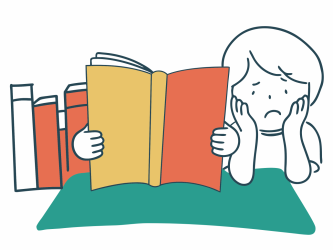
When your child says “I hate reading,” what’s your first instinct?
Most of us immediately jump to solutions: find a different book, try a new reading program, or maybe offer a reward for finishing chapters. We’re trying to be helpful, but we’re actually missing a huge opportunity to build one of the most important thinking skills your child will ever need.
Surface-level problem solving might fix the immediate issue, but it doesn’t teach children how to think deeply about challenges. When we rush to solutions, we’re essentially teaching our kids that problems should be fixed quickly rather than understood thoroughly.
But what if that “I hate reading” complaint is actually a treasure map to deeper insights?
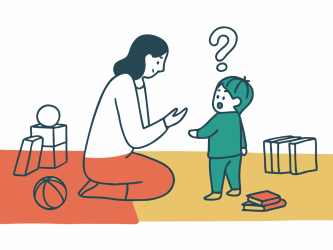
Instead of jumping straight to solutions, teach your children to ask “why” repeatedly until they reach the root cause. This isn’t about being annoying or overly analytical – it’s about developing the kind of deep thinking that transforms how children approach every challenge they’ll face in life.
Here’s how it works: Every problem, complaint, or challenge becomes an opportunity to dig deeper with gentle, curious questioning.
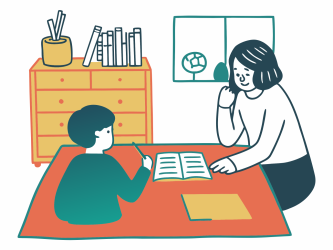
Traditional schools often don’t have time for this kind of individual exploration.
But as a homeschooling parent, you have the incredible advantage of being able to follow these threads wherever they lead.
You’re not just solving today’s reading problem – you’re building your child’s capacity for analytical thinking that will serve them in everything from relationships to career decisions.
Let’s take that “I hate reading” example and see what a why chain might reveal:
Child: “I hate reading!”
Parent: “That sounds frustrating. Why does reading feel hard right now?”
Child: “The words are too small and there are too many on each page.”
Parent: “Ah, so it feels overwhelming. Why do you think that bothers you?”
Child: “When I see all those words, I forget what I just read by the time I get to the end.”
Parent: “That makes sense. Why do you think you’re forgetting what you read?”
Child: “I don’t know… maybe because I’m thinking about all the words I still have to read?”
The Discovery: The real issue isn’t that your child hates reading – it’s that they’re feeling cognitively overwhelmed by visual density and losing focus. Now you can address the actual problem with strategies like covering part of the page, using a reading window, or choosing books with more white space.
The beautiful thing about why chains is that they teach children a thinking pattern they’ll use for life:
The key is approaching this with genuine curiosity, not like you’re conducting an interview. Use phrases like:
This works for any challenge your child faces:
“Math is stupid!” → Why does it feel that way? → Because I never know if my answer is right → Why is that bothering you? → Because when I get it wrong, I feel dumb → Why do you think that is? → Because I thought I understood it…
Now you know the real issue is confidence and feedback, not math ability.
“My brother is annoying!” → Why is he bothering you today? → He keeps interrupting when I’m building → Why do you think he’s doing that? → Maybe because he wants to help? → Why might that be important to him?
Now you can address the underlying need for connection rather than just the surface behavior.
Children who learn to use why chains become adults who:
The next time your child expresses frustration, resistance, or a problem, resist the urge to immediately offer a solution. Instead, get curious. Ask “why” at least three times before you start problem-solving together.
You might be surprised at what you discover – and how much your child enjoys being truly heard and understood at a deeper level.
Remember: You’re not just solving today’s problem. You’re teaching your child how to think deeply about every challenge they’ll ever face.
Isabella slammed the piano bench shut and crossed her arms. “I hate piano! I want to quit. It’s stupid and boring and I never want to play again!”
Her dad Marco looked up from his laptop, where he’d been researching new piano teachers and practice apps—his usual response when Isabella got frustrated with music. But something about her tone made him pause.
For the past month, Isabella had been increasingly resistant to piano practice. Marco had tried everything: a different practice schedule, new sheet music, even promising ice cream after practice sessions. Nothing worked. His nine-year-old daughter, who had once bounced eagerly to the piano bench, now approached it like she was walking to her execution.
“I’ve tried everything,” Marco muttered to himself, then stopped. Had he? Or had he just tried every solution without really understanding the problem?
He closed his laptop and sat down next to Isabella, who was still glaring at the piano keys.
“Isabella, I’m really curious about something,” he said gently. “You used to love piano so much. Help me understand what’s making it feel awful now.”
“I just hate it,” Isabella said, but her voice was softer now, less defiant.
“I hear that it feels terrible right now,” Marco said. “But I’m wondering… what specifically is making you hate it? Is it the songs you’re playing?”
Isabella shook her head. “The songs are fine.”
“Okay, so it’s not the music itself. What about practicing? Is it boring to sit here and play?”
“No, that’s not it either,” Isabella said, looking confused.
Marco felt his instinct to start problem-solving kick in, but he pushed it down. Get curious first, he reminded himself. “That’s interesting. So the songs are fine, and practicing isn’t boring. What do you think might be making piano feel bad then?”
Isabella was quiet for a long moment, her anger melting into something that looked more like sadness. “I don’t know. It just… makes me feel stupid now.”
Now they were getting somewhere. “Piano makes you feel stupid? That’s really important information. Why do you think that is?”
“Because…” Isabella’s voice got smaller. “Because I’m not good at it anymore.”
“What makes you think you’re not good at it?”
Isabella’s eyes filled with tears. “Because Sofia is better than me, and she just started!”
Marco felt the pieces clicking together. Sofia was Isabella’s six-year-old cousin who had started piano lessons a month ago—right around the time Isabella’s resistance had begun.
“Ah,” Marco said softly. “So you’re comparing how you play to how Sofia plays?”
“She’s so much better! And she’s only six!” Isabella’s words came out in a rush. “Last week at Nonna’s house, she played that song perfectly on the first try, and I’ve been working on harder songs for three years and I still make mistakes!”
Marco resisted the urge to immediately reassure her or explain why this comparison wasn’t fair. Instead, he stayed curious. “Why do you think it bothers you that Sofia seems to be learning quickly?”
Isabella thought about this. “Because… because if she’s better than me and she just started, that means I’m really bad at piano?”
“What makes you think that being better or worse than Sofia means something about whether you’re bad at piano?”
Isabella looked genuinely puzzled by the question. “I… I don’t know. Isn’t that how it works? If someone else is better, then you’re worse?”
Suddenly Marco understood. This wasn’t about piano at all. This was about Isabella’s belief that her worth as a musician—maybe even as a person—was determined by comparison to others.
“Isabella, I think I’m starting to understand why piano has been feeling so awful,” Marco said. “It sounds like you’re not actually angry at piano. You’re worried that if Sofia plays better than you, it means something bad about you.”
Isabella nodded, tears flowing freely now. “What if I’m just not musical? What if I’ve been trying for three years and I’m still not good?”
“What would it mean about you if you weren’t naturally musical?” Marco asked gently.
“That I’m… that I’m not special,” Isabella whispered.
There it was. The real issue hiding underneath “I hate piano.”
“Oh, sweetie,” Marco said, pulling her into a hug. “You thought that being good at piano was what made you special?”
Isabella nodded against his shoulder.
“And when Sofia seemed to pick it up quickly, it felt like maybe you weren’t special after all?”
“Yeah,” Isabella said in a small voice.
Marco held her for a moment, amazed at how far they’d traveled from “I hate piano” to the real fear underneath. No wonder his solutions hadn’t worked—he’d been trying to fix the wrong problem.
“Isabella, what if I told you that Sofia learning quickly doesn’t mean anything about how good you are? What if you could both be learning piano in your own ways?”
“But she played that song perfectly…”
“Why do you think that song might have been easy for Sofia specifically?”
Isabella considered this. “Well… it was ‘Happy Birthday’ and she already knew the melody?”
“Exactly. And what are you working on?”
“Bach,” Isabella said, sniffling.
“So you’re comparing Sofia playing a simple melody she already knows to you learning complex classical music you’ve never heard before?”
Isabella looked up at him with a small smile. “That’s not really fair, is it?”
“What do you think? Why might comparing your hardest work to her easiest work not give you good information about your abilities?”
“Because… because we’re doing totally different things?”
“What else might be different about your piano journeys?”
Isabella was getting interested now, her investigative mind taking over. “Well, I’m learning to read music and she’s just playing by ear. And I can play songs with both hands, and she’s only using one hand.”
“What does that tell you?”
“That we’re not really in the same place, so comparing doesn’t make sense,” Isabella said, looking surprised by her own conclusion.
Marco smiled. “What would happen if you thought about piano as your own personal journey instead of a competition with Sofia?”
“It would be… more fun, I think,” Isabella said slowly. “I could focus on getting better instead of worrying about being better than someone else.”
“How does that feel?”
“Like I want to practice,” Isabella said, surprised. “Actually practice, not just sit here dreading it.”
That evening, as Isabella happily worked through her Bach piece—making mistakes and laughing instead of getting frustrated—Marco reflected on what had happened.
His first instinct had been to solve the surface problem: find new music, change teachers, adjust practice schedules. But by getting curious instead of jumping to solutions, he’d discovered that the real issue was comparison anxiety and identity confusion, not musical challenge.
“Dad,” Isabella called from the piano bench, “I figured out why that section was so hard. Want to hear my theory?”
Marco grinned. Not only had they solved the piano problem, but Isabella was now approaching her challenges with the same curious, investigative mindset he’d modeled.
“I’d love to hear your investigation,” he said.
And as Isabella explained her musical detective work, Marco realized he’d given her something much more valuable than better practice techniques. He’d taught her to think deeply about problems instead of just reacting to them.
That was a skill that would serve her far beyond piano—in friendships, school challenges, and every difficult situation she’d face in life.
Sometimes the most powerful thing you can do isn’t to solve the problem. It’s to understand it first.