There’s a moment that happens dozens of times a day, maybe more. You feel a pull to say something, do something, or try something new. The impulse is clear and immediate. But before you can act on it, another voice steps in—questioning, calculating, editing. Within seconds, the brightness of that original spark dims, and you’re left wondering why you always hold yourself back.
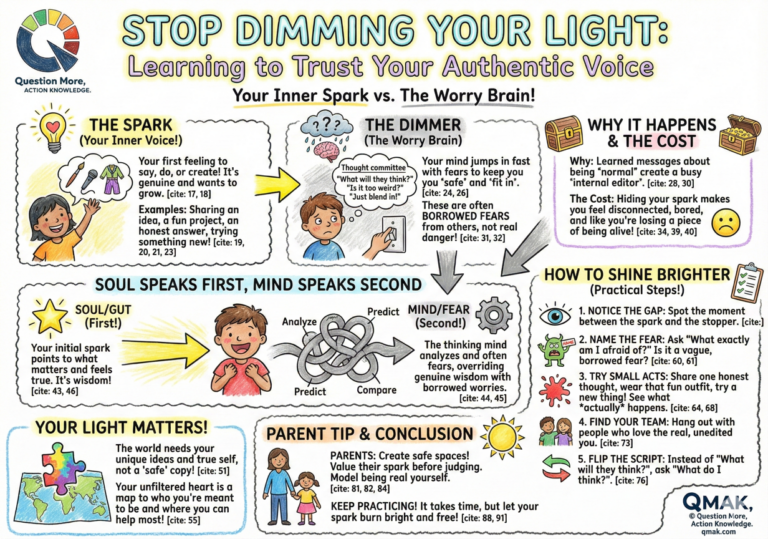
This internal negotiation is what “Dimming Your Light” explores. It’s not about rebellion or ignoring wisdom. It’s about recognizing when you’re genuinely listening to your authentic voice versus when you’re playing it safe to avoid discomfort or judgment.
The song outlines a pattern that most of us know intimately:
Step 1: The Authentic Impulse Something inside you wants to speak, move, create, or connect. This isn’t random—it comes from a genuine part of you that sees an opportunity to express, contribute, or grow. Maybe it’s:
Step 2: The Override Before the impulse can become action, your thinking mind intervenes with a committee meeting of concerns: “What will they think? Will they understand? Is this too much? Should I just blend in?”
These questions aren’t inherently wrong. Sometimes we need to consider context and consequences. But often, they’re not protecting you from genuine danger—they’re protecting you from discomfort, from standing out, from the possibility of rejection or judgment.
Your mind has been trained to prioritize safety and social acceptance. From early childhood, you’ve received thousands of messages about staying quiet, fitting in, being normal, and not making a scene. These messages came from parents, teachers, peers, media, and social norms.
The result? A hyperactive internal editor that treats authentic self-expression as a threat.
The problem is that these boundaries often aren’t yours—they’re “borrowed fears,” as the song puts it. They’re inherited from people who were themselves afraid. They’re based on outdated situations or overblown consequences. They’re a protective mechanism that’s become a prison.
Every time you silence what’s true inside, something happens. The song describes it clearly: “You lose a little piece of being alive.”
This isn’t melodramatic. Consider what happens when you repeatedly:
Over time, you become disconnected from your own preferences, opinions, and desires. You might find yourself:
The real tragedy isn’t that you’re holding back one idea or one outfit choice. It’s that you’re systematically training yourself not to trust your own instincts, not to honor your own voice, not to value your own uniqueness.
Here’s a framework that makes this clearer: Your initial impulse—that first feeling of “yes, this” or “I want to try this”—comes from a more integrated, intuitive part of you. Call it your soul, your authentic self, your deeper wisdom, or simply your instinct. It’s the part of you that knows what resonates, what matters, what feels true.
The thinking mind speaks second. It analyzes, predicts, compares, and often fears. While this analytical function serves important purposes, it frequently overrides genuine wisdom with borrowed concerns.
“Your soul speaks first for a reason.” That initial spark isn’t random. It’s pointing you toward something that matters—toward growth, expression, connection, or truth.
The practice isn’t to ignore all caution. It’s to notice the difference between:
The bridge of the song asks a powerful question: “What if the thing you’re holding back is exactly what the world needs to see?”
This isn’t just feel-good rhetoric. Think about it practically:
On an individual level, the things that make you unique—your particular way of seeing, your specific combination of interests, your unusual perspectives—are precisely what make you valuable in relationships, work, and creative pursuits. When you dim these to be “normal,” you become interchangeable. You lose what makes you specifically you.
On a collective level, progress comes from people who don’t edit themselves into conformity. Every innovation, every cultural shift, every improvement started with someone honoring an impulse that the majority dismissed as weird, impractical, or inappropriate.
Your “unfiltered heart” might actually be the map to becoming who you’re meant to be—not in some cosmic destiny sense, but in the practical sense that your authentic interests and inclinations point toward where you can contribute most naturally and effectively.
So how do you actually change this pattern? Here are concrete practices:
Start tracking the moment between impulse and override. What did you originally want to say or do? What talk yourself out of it? Just notice this pattern without judgment. You can’t change what you can’t see.
When you feel yourself dimming, ask: “What specifically am I afraid will happen?” Often, you’ll find the fear is vague (“they’ll think I’m weird”) rather than concrete. Vague fears are usually inherited fears.
You don’t have to make dramatic changes. Try:
Notice what actually happens versus what you feared would happen.
Not all self-editing is dimming your light:
Learn to tell the difference.
Surround yourself with people who appreciate your unedited self. This doesn’t mean finding people who agree with everything you say—it means finding people who value authenticity and don’t punish you for being genuine.
When that question arises, ask instead:
The world doesn’t need another shade of safe and blue. It needs the specific colors you contain.
If you’re reading this as a parent, consider:
Your child has probably already learned to dim their light. The world teaches this early. Your job isn’t to add more editing but to create spaces where they can practice authentic expression safely.
Model it yourself. Children learn more from what they see than what they hear. Let them see you honor your own authentic impulses, admit when you’re editing yourself, and practice speaking your truth.
Reduce judgment. When your child shares something unusual, weird, or unexpected, your first response sets the tone. Curiosity beats criticism. “Tell me more about that” beats “That’s strange.”
Validate first impulses. Before jumping to practical concerns, acknowledge their authentic desire. “You really want to try that” or “That matters to you” validates their internal compass before you discuss logistics or concerns.
Distinguish between harmful behavior and authentic expression. Your child shouldn’t hurt others, but they also shouldn’t have to sand down every unique edge to be acceptable. Learn the difference between genuine boundaries and borrowed fears you’re passing down.
You won’t flip a switch and suddenly shine without editing. This is a practice, not a destination. You’ll still feel the pull to dim yourself. The committee in your head won’t disband overnight.
But you can start noticing when it happens. You can question whether the boundaries you’re respecting are genuinely yours or borrowed from people who were afraid. You can experiment with letting more of your authentic voice through and see what actually happens.
The spark inside wants to speak. It wants to burn bright and burn free. Your job isn’t to force it or perform it. Your job is simply to stop dimming it.
Let it shine.