Helping children transcend the need to be right is an essential aspect of their intellectual and social development that goes far beyond simply teaching them to accept being wrong gracefully.
It’s about fostering children’s understanding of multiple perspectives, developing genuine empathy, building reflective thinking skills, and helping them discover that learning and growing are far more valuable than winning arguments or appearing to have all the answers.
For children aged 11 and up, developing freedom from the need to be right creates a foundation for deeper learning, more authentic relationships, better collaboration, and the intellectual flexibility needed to navigate an increasingly complex world.
At this developmental stage, children are forming their intellectual identities and beginning to engage with more complex ideas and debates. Learning to value understanding over being correct empowers them to become genuine learners rather than defenders of fixed positions.
This guide offers research-based strategies and practical activities that help cultivate these essential skills through engaging, age-appropriate approaches.
Helping children move beyond the need to always be correct:
Understanding how our brains form moral judgments — and how inconsistent those judgments can be — is a powerful foundation for children learning to let go of the need to always be right. The Brain Games episode “Morality” explores the surprising science behind how we decide what’s right and wrong, revealing that our moral reasoning is far less logical and far more influenced by emotion, context, and framing than we like to believe. The episode’s clearest demonstration is the classic trolley problem: nearly everyone agrees to pull a switch to sacrifice one person and save four, but refuses the mathematically identical trade when it requires physically pushing someone — activating entirely different brain systems (calculated reasoning versus emotional aversion) for the exact same outcome.
Through thought-provoking experiments and ethical dilemmas — including hidden-camera tests showing how a person’s appearance alone can determine whether strangers help them, and how being treated rudely measurably lowers people’s honesty — children discover that even their strongest convictions can shift dramatically depending on how a situation is presented.
These insights help children see that clinging to being “right” is often less about truth and more about how their brain has processed a particular situation. When they experience firsthand how easily moral certainty can be manipulated by framing and context, they begin to develop the flexibility to hold their views with greater humility.
This scientific understanding encourages children to value understanding over winning arguments, and to approach disagreements with curiosity rather than defensiveness — a transformative shift in how they relate to others and to their own beliefs.
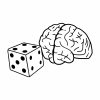
Episode: Morality
Explores the surprising science behind moral decision-making — including the classic trolley problem and real hidden-camera experiments — revealing how emotion, context, and framing shape our sense of right and wrong.
This strategy helps children realize that there are multiple valid viewpoints and that being right is not the only—or even the most important—goal. Understanding others’ perspectives fosters a more collaborative and less confrontational approach to interactions (Lagattuta, 2018).
Through perspective-taking activities, children learn to:
This strategy helps children become more self-aware and open to the idea that making mistakes or not having all the answers is a natural and valuable part of learning and growing.
Through reflective thinking practices, children learn to:
This strategy helps children understand that mistakes are opportunities for learning, making the insistence on being right less important than gaining new insights and knowledge.
Through mistake-embracing activities, children learn to:
This strategy recognizes that modeling humble and open behavior provides concrete examples for children to follow, reinforcing that these are valuable and admirable traits worth developing.
Through modeling and reinforcement, children learn to:
This strategy teaches children the importance of contributing positively to a group and understanding that collective outcomes are more important than individual correctness.
Through collaborative experiences, children learn to:
Each strategy section includes detailed activities, implementation guides, and tips for success.
Choose activities based on:
Remember that transcending the need to be right is a gradual process that requires:
When implementing these activities:
Select any of the five strategy sections above to find detailed activities and implementation guides.
Each section provides practical tools and approaches that you can start using today to help your child develop intellectual humility and freedom from the need to always be right.
Remember: The goal isn’t to make children uncertain about everything or to undermine their confidence. It’s to help them discover that genuine understanding is more satisfying than winning arguments, that learning requires openness to being wrong, and that the most interesting conversations happen when we’re curious rather than defensive. Children who transcend the need to be right become better learners, better friends, better collaborators, and ultimately, wiser people who can navigate complexity with grace and genuine curiosity.