Personal power is not about controlling others but about developing an internal sense of capability, confidence, and agency.
For children, this foundation of self-assurance is crucial for navigating challenges, building healthy relationships, and developing resilience.
This guide provides research-based strategies and practical activities designed for children aged 6 and up, helping them recognize their own strengths, make meaningful choices, and develop the confidence to face life’s challenges.
By fostering personal power early, we help children build the internal resources they’ll need throughout life.
Developing a sense of personal power in children:
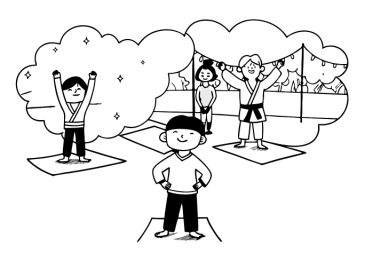
Helping children identify and celebrate their unique abilities creates a foundation for lasting confidence.
This strategy focuses on recognizing individual talents and creating opportunities for children to experience competence and mastery.

Episode: Magic
Season 3, Episode 10
Bingo is upset Mum won’t play, so Bluey teaches her “magic” — pretend hand gestures that control people. They use it on Dad and Lucky’s Dad. But Mum appears with her own magic and teaches the most important rule: never use magic for cheekiness.
Why it matters. This episode is a masterclass in the difference between power over others and power with others. Bluey and Bingo start with a genuine problem: Bingo wants to play and Mum is too tired. Bluey’s solution — magic that forces people to do what you want — works brilliantly at first. They make Dad and Lucky’s Dad tango. It’s hilarious. But Chilli reframes the whole game: magic should never be used to force people. It should be used to help. Bluey resists this. She argues she was helping — Bingo was sad! But Chilli holds the line, and the real test comes when Bluey tries to use her magic to control Bingo. Suddenly Bluey’s ally switches sides. Bingo joins Mum’s magic because she recognises the difference between being empowered and being controlled. Personal power, this episode argues, isn’t about making others do what you want. It’s about understanding that the most powerful thing you can do is choose to use your influence for good — and that when you use it to dominate, even the people on your side will turn away.
After watching:
Physical activities and social interactions provide powerful contexts for developing confidence, cooperation, and leadership skills.
This strategy emphasizes structured opportunities for both physical development and positive social engagement.
Episode: Cricket
Season 3, Episode 47
During a neighbourhood game, the dads try to bowl Rusty out — and fail. Flashbacks reveal Rusty’s obsessive practice, his fear of fast bowling, a letter from his deployed dad, and his eventual mastery. In the final ball, Rusty deliberately hits an easy catch to his little sister.
Why it matters. This is one of the most celebrated episodes of Bluey for good reason: it’s a complete portrait of what personal power actually looks like when it’s fully developed. Rusty doesn’t start powerful. The flashbacks show him flinching, getting hit by fast balls, lying awake at night scared of a bowler named Tiny. His dad, away in the army, writes him a letter that contains the episode’s thesis: as you grow up, you’ll face harder things than a cricket ball. You’ll have two choices — back away and get out, or step in front and play a pull shot. Rusty chooses to step in. He practises relentlessly. He adapts — learning to square cut so he won’t hit the ball through his mum’s kitchen, playing on rough pitches at Jack’s house, facing pace bowling until it no longer terrifies him. By the time we return to the present, he’s untouchable. The dads can’t get him out. But here’s where the episode transcends a simple “practice makes perfect” story. In the final delivery, Rusty could smash it anywhere. Instead, he lobs it gently to his little sister Dusty, giving her the catch. That’s what cricket is about, Bandit tells Bluey. And that’s what personal power is about: building yourself up not so you can dominate, but so you can lift someone else.
After watching:
Making choices and experiencing their consequences helps children understand their agency in the world.
This strategy focuses on providing age-appropriate decision-making opportunities that build confidence and judgment.
Episode: Dance Mode
Season 2, Episode 1
Dad eats Bingo’s last chip. To make it up to her, Bingo gets three “dance modes” — she can force Mum and Dad to dance whenever there’s music. But everyone keeps taking her turns for her, and Dad even bribes her to give up the last one.
Why it matters. This episode is about something children experience constantly and rarely have the language for: other people overriding your choices “for your own good.” Bingo is given power — three dance modes, her decision, her timing. But Bluey activates the first one before Bingo chooses. Mum persuades Bingo to use the second on Dad. And when the third one approaches — in front of a crowd — Dad bribes her with twenty dollars to give it up, then Bluey talks her into spending the money on a toy she doesn’t even want. Everyone takes from Bingo with smiles and “please” faces, and she lets them because saying no is hard. In the car, she communicates through the Yes-No toy because she’s too upset to speak. This is a devastating portrait of what happens when a child’s personal power is systematically, lovingly dismantled by the people closest to them. The family recognises what they’ve done and gives Bingo back her moment — all four of them dancing wildly in front of the crowd. But the real lesson is in the damage, not the repair. Your child needs to know that their “yes” should be a real yes, not a surrender. And that the people who love you most can still, without meaning to, take your power away.
After watching:
Cognitive growth enhances problem-solving abilities and creative thinking, both essential components of personal power.
This strategy emphasizes activities that challenge the mind and build intellectual confidence.
Episode: Chest
Season 3, Episode 11
Dad tries to teach Bluey chess. She calls it “chest,” the pawns become “prawns,” and Bingo names the knights Gallahop and Daughter of Gallahop. Dad keeps winning. Mum steps in — not to win the game, but to teach Dad what he’s really trying to do.
Why it matters. On the surface, Bandit wants to teach his daughters chess because smart people play chess. But Chilli sees through it. In a beautiful four-move sequence — where she deliberately loses the game while winning the conversation — she draws out what Bandit is actually afraid of: that one day the girls will be on their own, and he won’t be there to protect them. He wants them to be strategic, strong, capable. He wants to arm them. Chilli’s reframe is the heart of the episode: right now, you kids are little prawns. But one day you’ll be queens. And I won’t always be there to protect you — but right now, I’ll do whatever I can to help. For a child watching this, the message about personal power is layered. Bluey and Bingo don’t play chess “correctly” — they name pieces, invent stories, send queens on picnics across Dad’s backside. But they’re not doing it wrong. They’re making the game theirs. They’re bringing imagination and heart to something that’s supposed to be pure strategy. That’s its own kind of power. And Chilli’s message — that the little pieces grow into the most powerful ones — is a promise every child needs to hear.
After watching:
Understanding and managing emotions effectively is essential for developing authentic personal power.
This strategy focuses on building awareness of emotions and developing healthy regulation skills.
Episode: Favourite Thing
Season 2, Episode 7
Over dinner, the Heelers take turns sharing the best moment of their day. When Bluey shares hers — Bingo saying “trifficult” instead of “difficult” — everyone laughs except Bingo, who is humiliated. Bluey spends the rest of dinner trying to fix it.
Why it matters. This episode is about a specific kind of personal power that children are only just learning to wield at this age: the power of your words to affect someone else, even when you don’t mean to. Bluey didn’t intend to hurt Bingo. She thought “trifficult” was adorable, not embarrassing. But Bingo heard the laughter differently — she heard the family laughing at her, not with her. The gap between intention and impact is one of the hardest lessons of childhood. What follows is Bluey’s relentless, creative, deeply loving attempt to cheer her sister up. She changes her favourite thing. She gets Mum and Dad to share funny Bingo stories. She invents an entire fantasy about Jetpack Bingo saving a gnome and Dad kissing a hippo. Nothing works — until Bingo’s own nature saves her. She giggles at Dad’s water-spitting and finally offers her own favourite thing. The episode doesn’t wrap up neatly. Bingo smiles, but she’s still a little bruised. That’s real. Your child needs to know that accidentally hurting someone doesn’t make you a bad person — but it does make you responsible for trying to repair it. And that sometimes the repair takes longer than you want.
After watching:
Each strategy section includes detailed activities, implementation guides, and tips for success. When choosing activities, consider:
Remember that developing personal power is an ongoing process that involves:
To make the most of these activities:
Select any of the five strategy sections above to find detailed activities and implementation guides.
Each section provides practical tools and approaches that you can start using today to help your child develop a greater sense of personal power.
Remember: Building personal power is about helping children recognize their inherent value, develop confidence in their abilities, and understand that they have meaningful influence over their own lives and choices.
Film: Phoebe in Wonderland (2008) Director: Daniel Barnz | Runtime: 96 minutes | Origin: USA
Small steps forward, big dreams inside
Finding your voice when the world feels wide
First day feelings, butterflies in your chest
Looking in the mirror at a work in progress
Everybody telling you what you should be
But the real magic happens when you start to believe
That light inside you
Is brighter than you know
It’s waiting to show
You got that inner light
That fires up the dark
You got that special spark
That makes you who you are
You got that inner strength
It’s there with every breath
Just trust yourself and see
The power meant to be
Making choices, learning what feels right
Sometimes you stumble but you’re still alright
Finding your talents, one day at a time
Every small victory helps your spirit climb
And when the world gets too loud
When doubts start to crowd
Remember who you are
You’ve come so far
Stand tall (Stand tall)
Speak up (Speak up)
Your voice matters more than you know
Dream big (Dream big)
Reach out (Reach out)
You’re stronger than yesterday, so
You got that inner light
That fires up the dark
You got that special spark
That makes you who you are
You got that inner strength
It’s there with every breath
Just trust yourself and see
The power meant to be
Finding your power day by day
Walking your path, making your way
That light inside, it’s yours to keep
Your story’s yours, your roots grow deep