
![]()
Have you ever noticed how a restaurant kitchen runs smoothly during busy times, with everyone knowing exactly what to do?
Or how pilots always go through the same safety checks before taking off?
These are examples of standard operating procedures (SOPs) – clear instructions that help people do tasks the same way every time, like following a recipe to make your favorite meal.

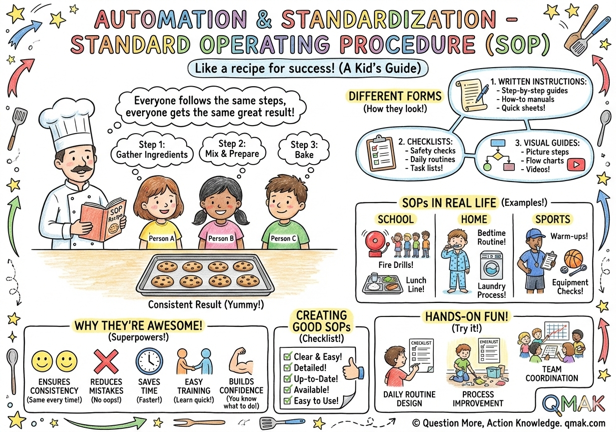
A standard operating procedure is like a detailed recipe or instruction manual that explains the best way to do something.
It’s a set of step-by-step directions that anyone can follow to get the same result every time, just like how following the same recipe should give you the same tasty cookies each time you bake.
SOPs come in different forms:
Let’s see how SOPs help various systems run smoothly:
SOPs help systems by:
Ensuring Consistency: Things get done the same way each time
Reducing Mistakes: Everyone knows the correct steps
Saving Time: No need to figure things out repeatedly
Making Training Easier: New people learn quickly
Building Confidence: Everyone knows what to do
Effective SOPs should be:
Remember, standard operating procedures are like having a really good map that shows exactly how to get somewhere or do something. Just like how pilots use checklists to make sure every flight is safe, or how restaurants use recipes to make sure every meal tastes great, SOPs help us do things the right way every time.
They take the guesswork out of tasks and help everyone work together more effectively.
Sully provides a gripping examination of how Standard Operating Procedures function under extreme pressure through its portrayal of the “Miracle on the Hudson.”
Through Captain Sullenberger’s split-second decisions after losing both engines, students witness the complex relationship between following established protocols and exercising critical judgment when SOPs meet unprecedented situations.
The film’s intense focus on the 208 seconds of flight time demonstrates how SOPs serve as crucial guideposts in crisis situations, while the subsequent investigation reveals the tension between rigid adherence to procedures and the need for human flexibility in extreme circumstances.
As viewers follow both the dramatic water landing and the meticulous investigation that follows, they learn how effective systems must balance standardized responses with room for experienced judgment.
Through Sully’s calm decision-making and his defense of choosing an unprecedented water landing over standard airport return protocols, the film shows how SOPs should guide rather than constrain decision-making when lives are at stake.